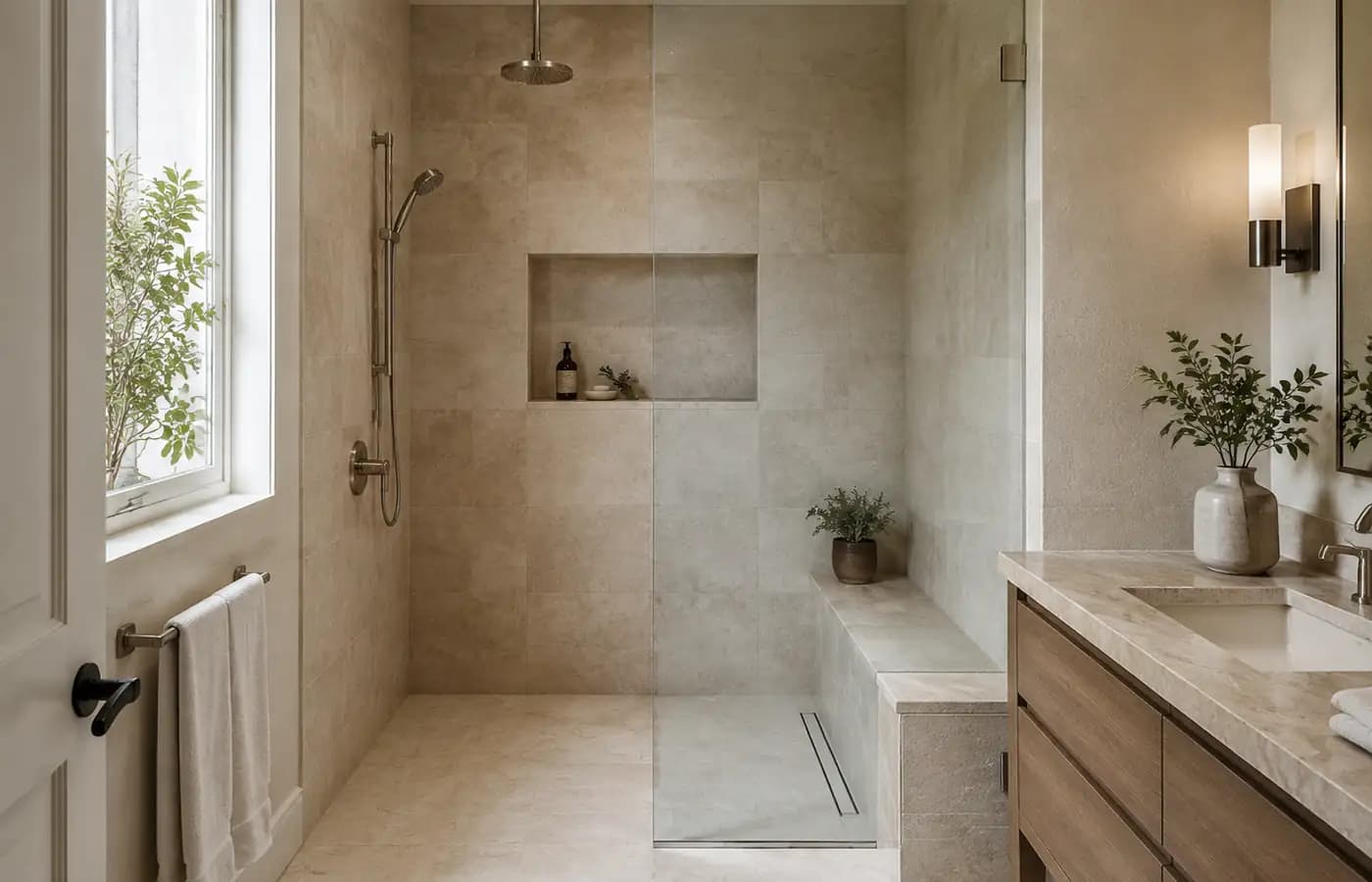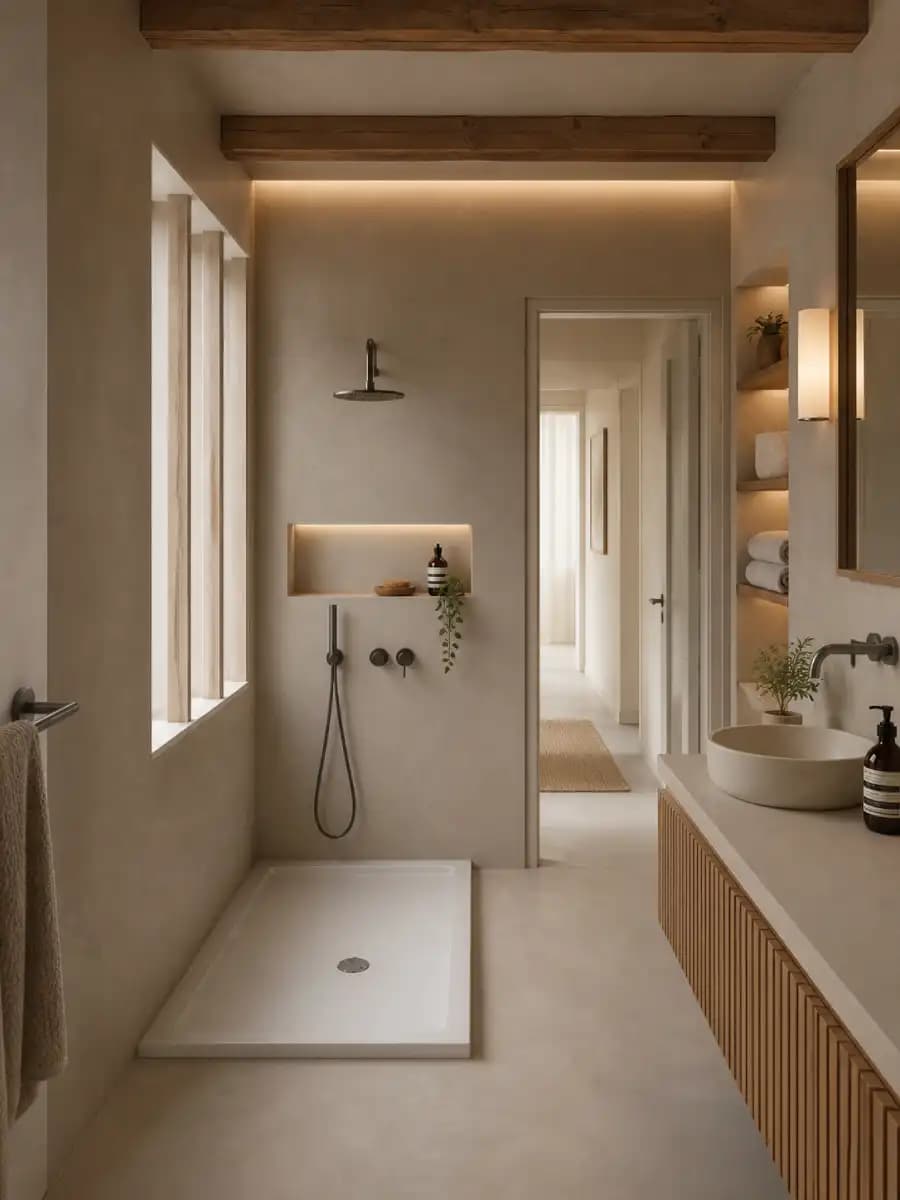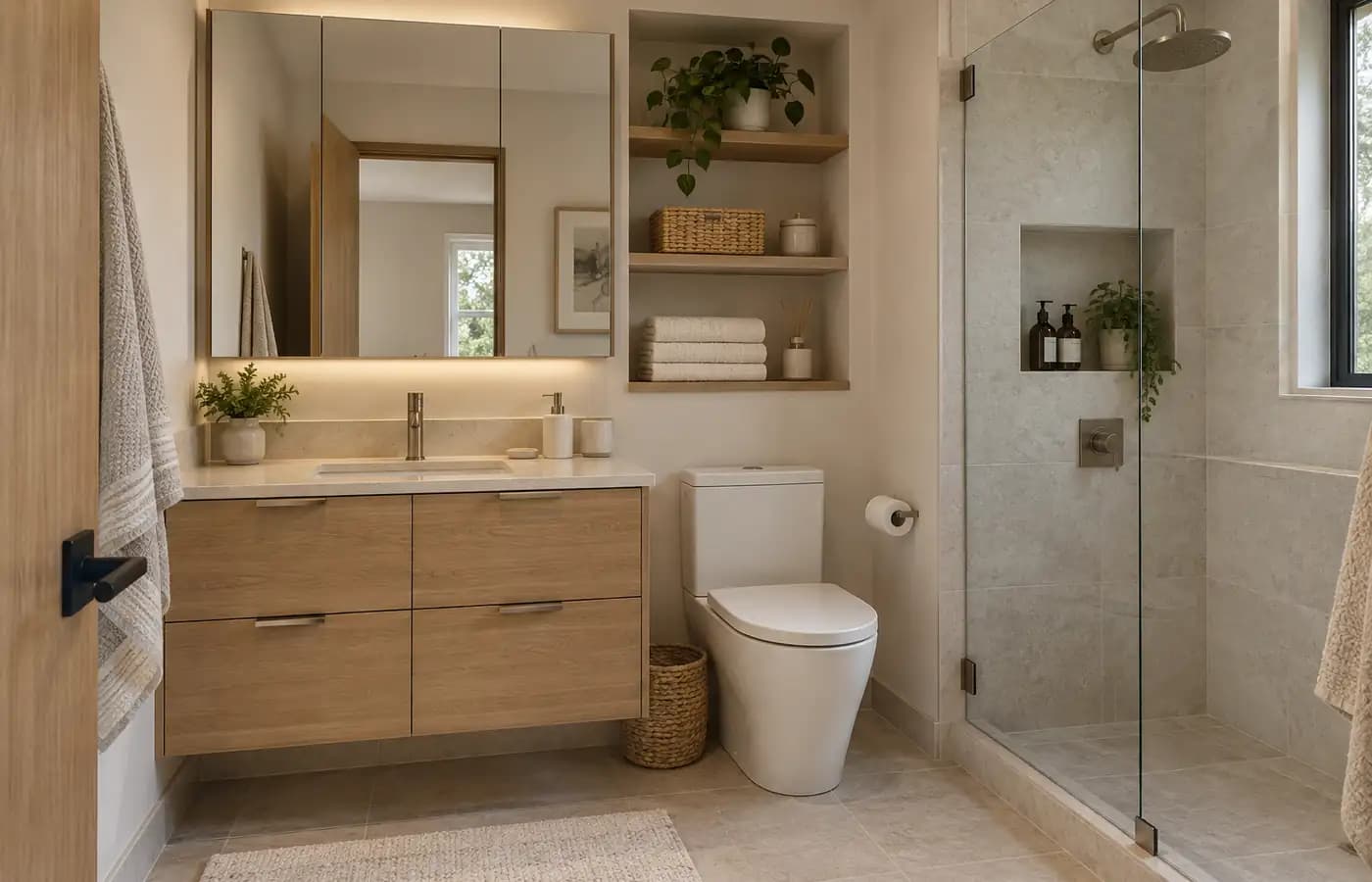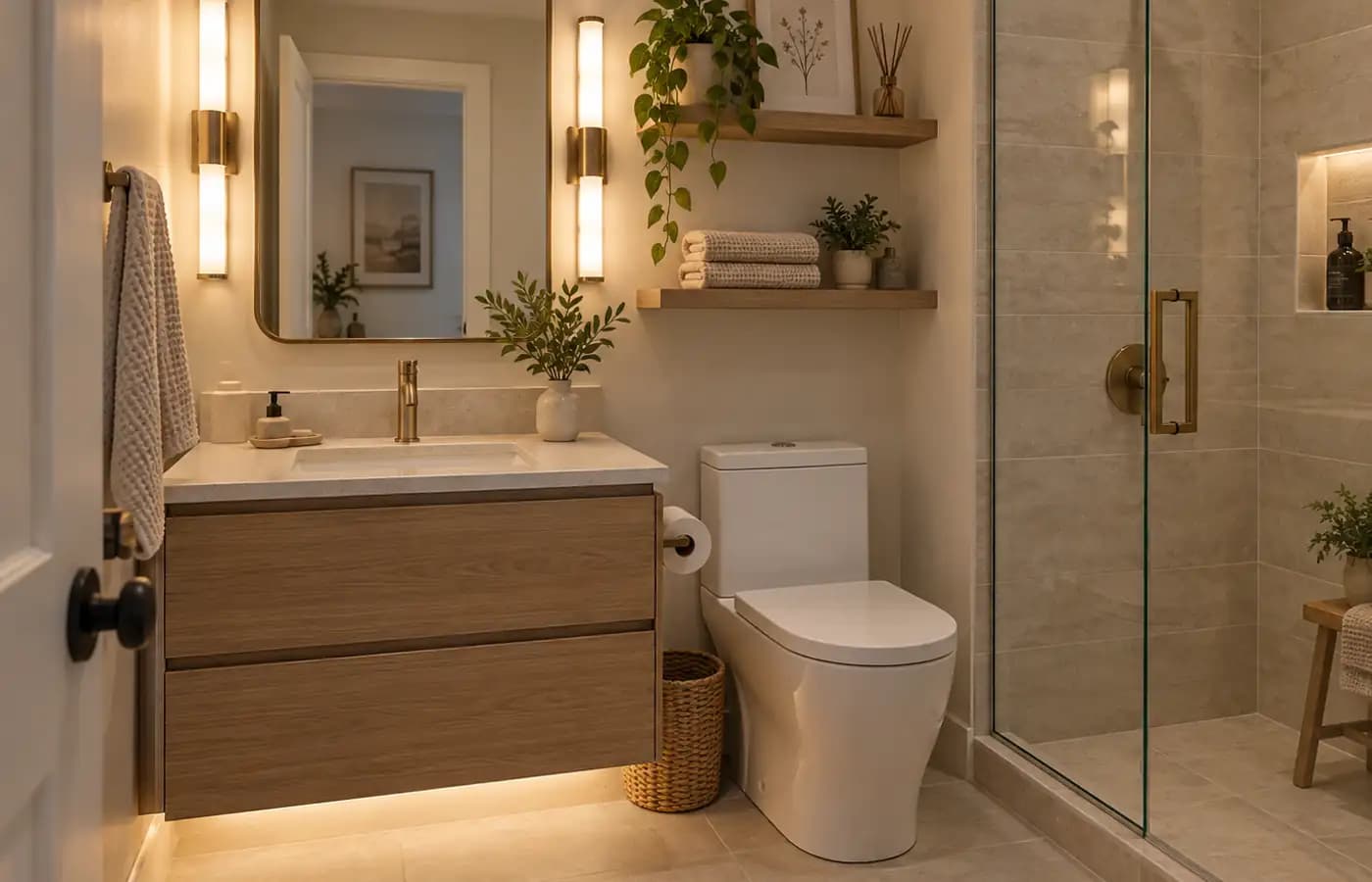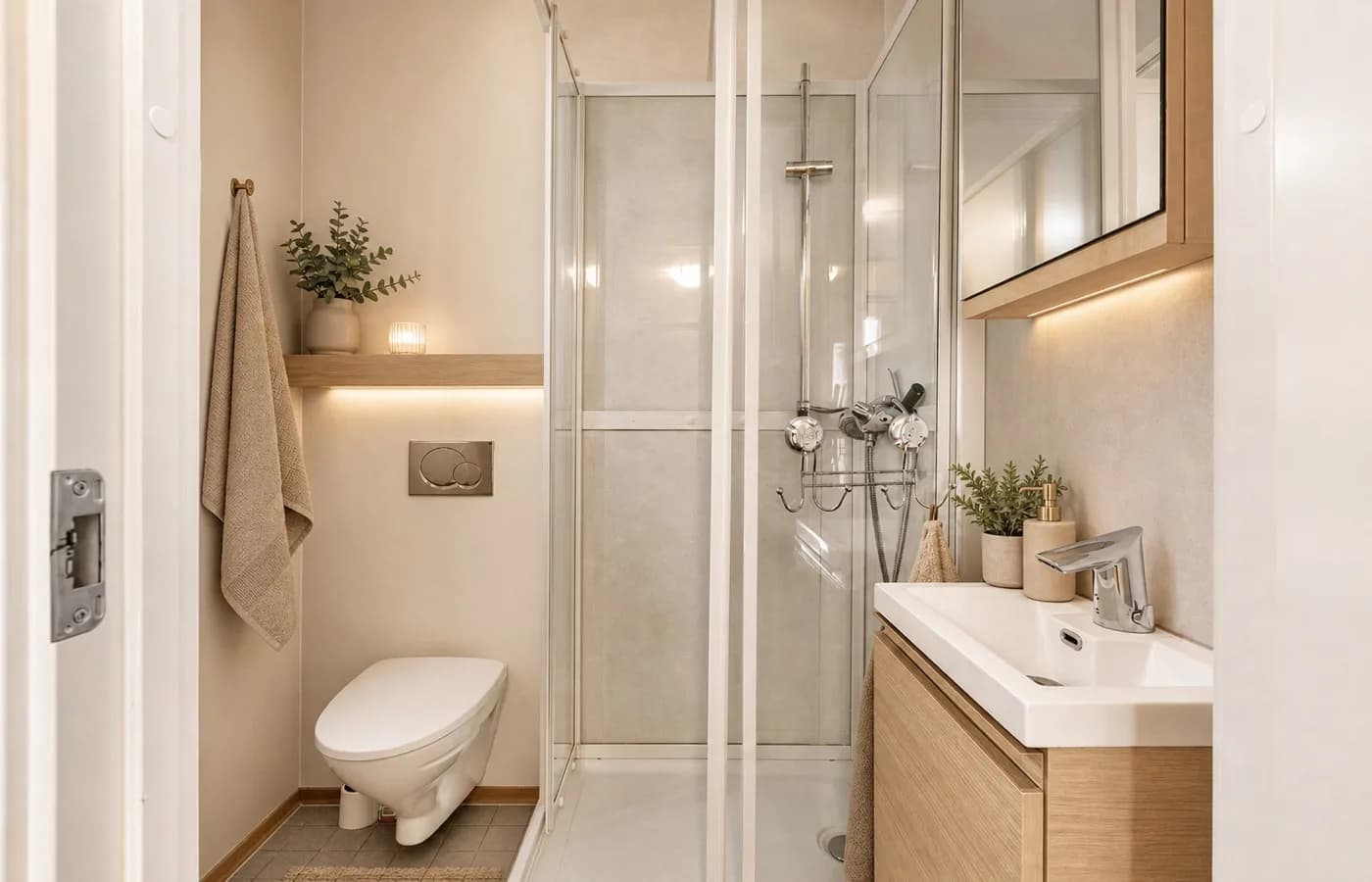
Homeowners hunting for { type: "bold", text: "small bathroom shower tile ideas" } are usually trying to solve three problems at once: make the shower feel larger, keep cleaning realistic, and avoid a pattern that fights the room's short walls.
This guide turns { type: "bold", text: "tile shower ideas small bathrooms" } into twelve testable layouts. Start with scale and continuity, then compare accent strategies, floor choices and a photo-based sequence before you order samples. Start with the AI bathroom workflow.
Start with scale, not the trend tile
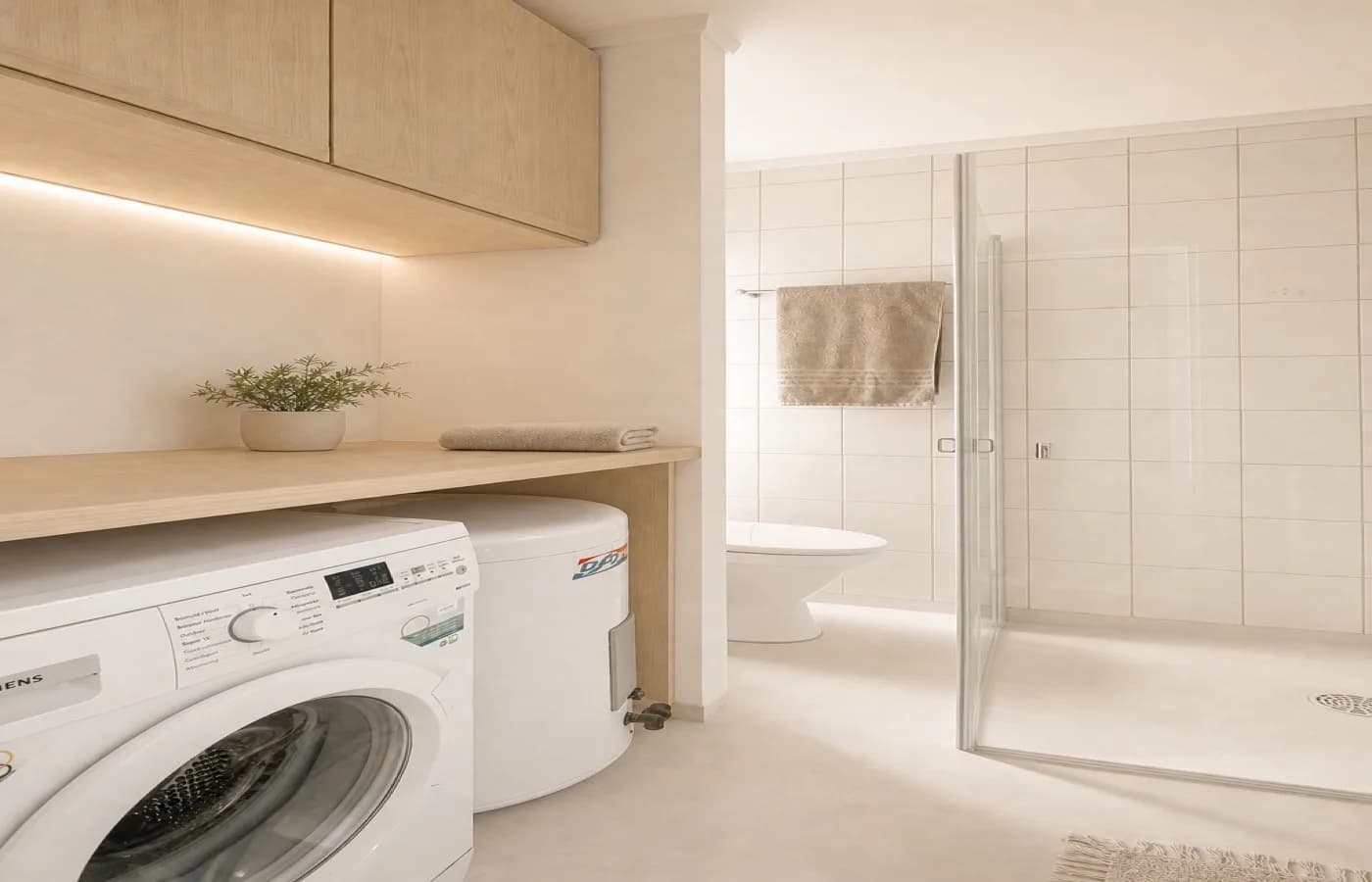
In a compact shower, tile size changes how many cuts, grout lines and visual stops appear. Large-format walls can calm a boxy stall, but only if the layout still respects corners, niches and valves. Small mosaic floors can help with slope and grip, yet too many busy walls make the room feel busier. Choose scale for the geometry you photographed, not for a showroom wall.
Use continuity to borrow width
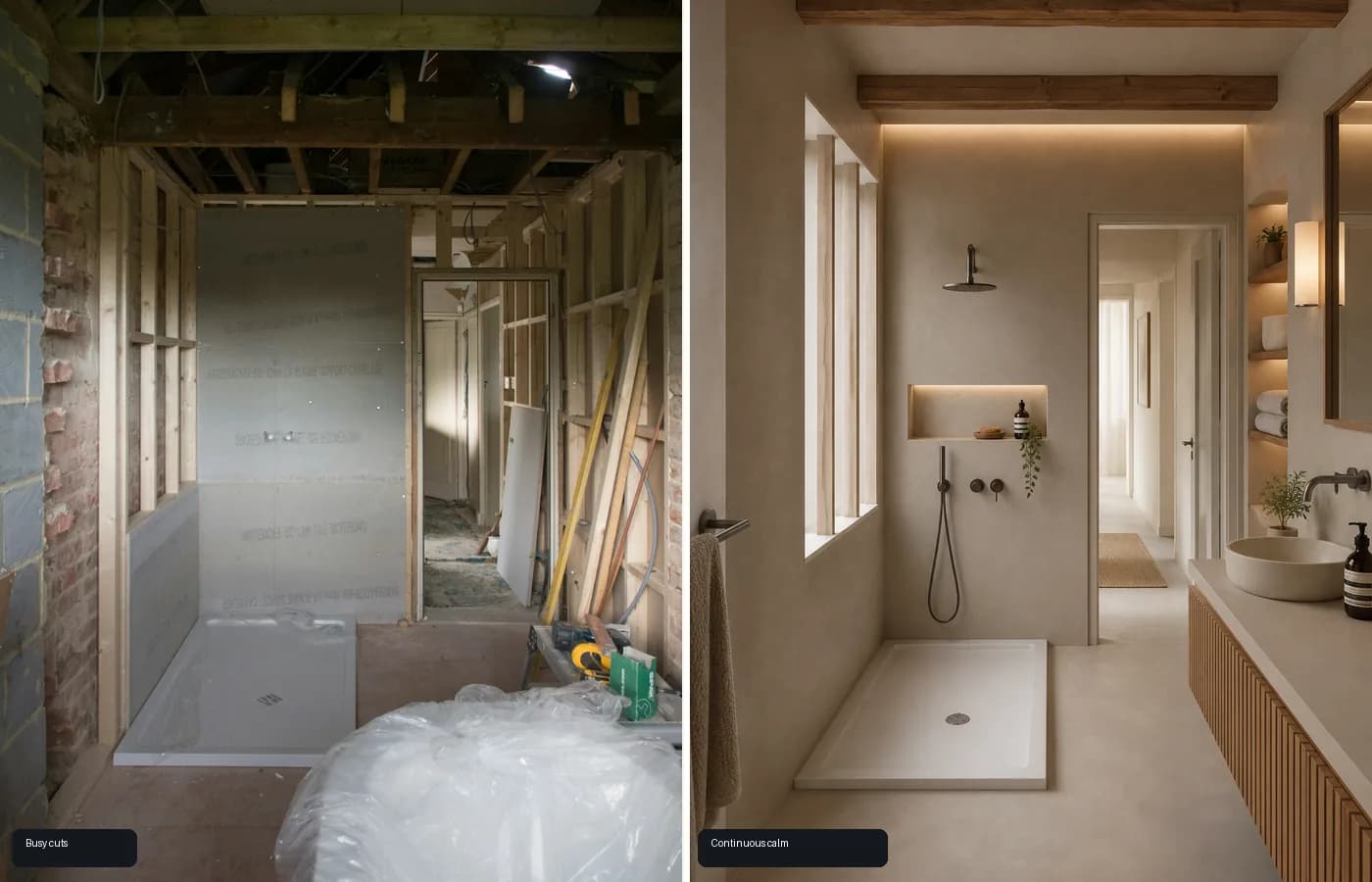
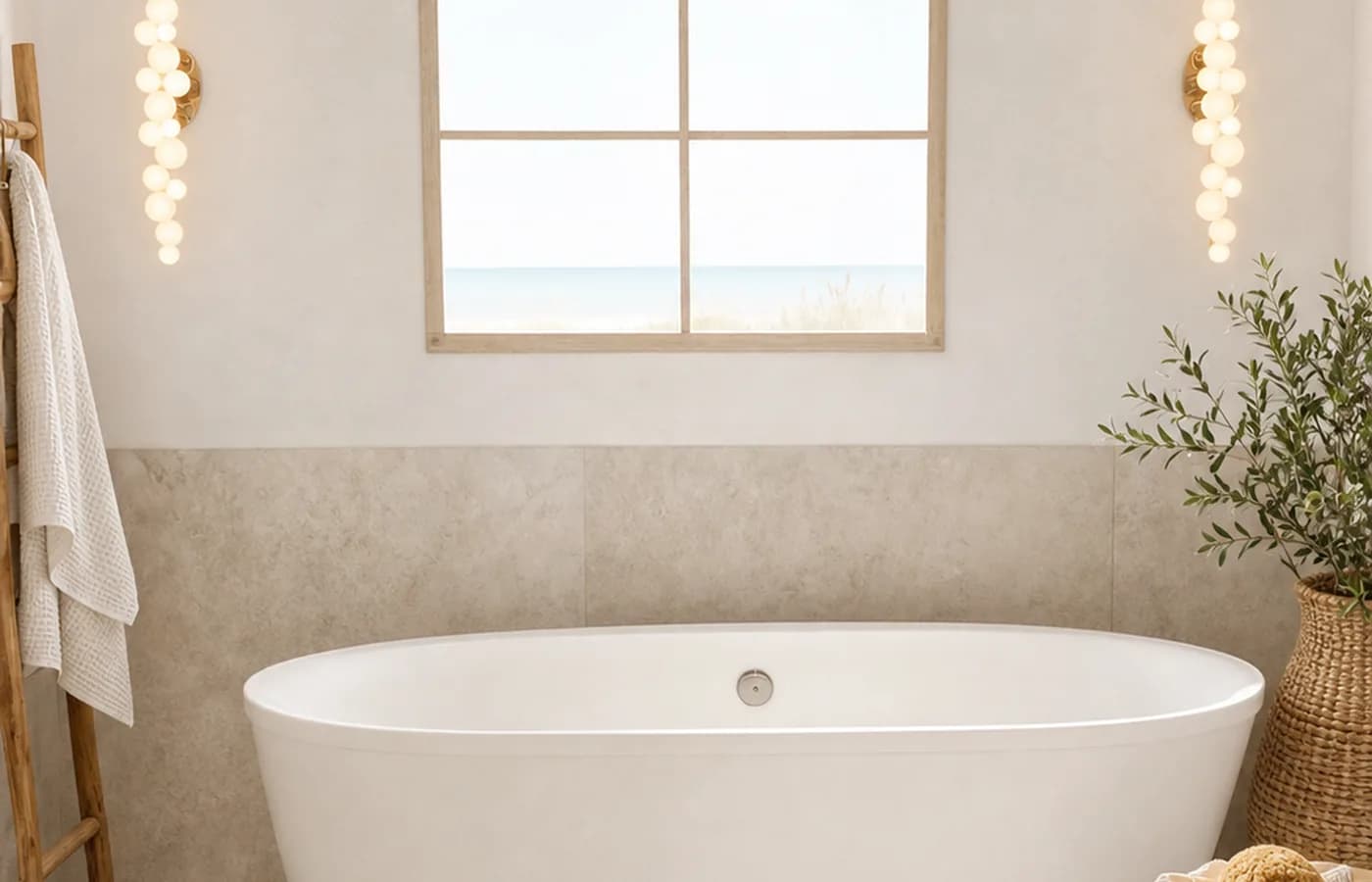
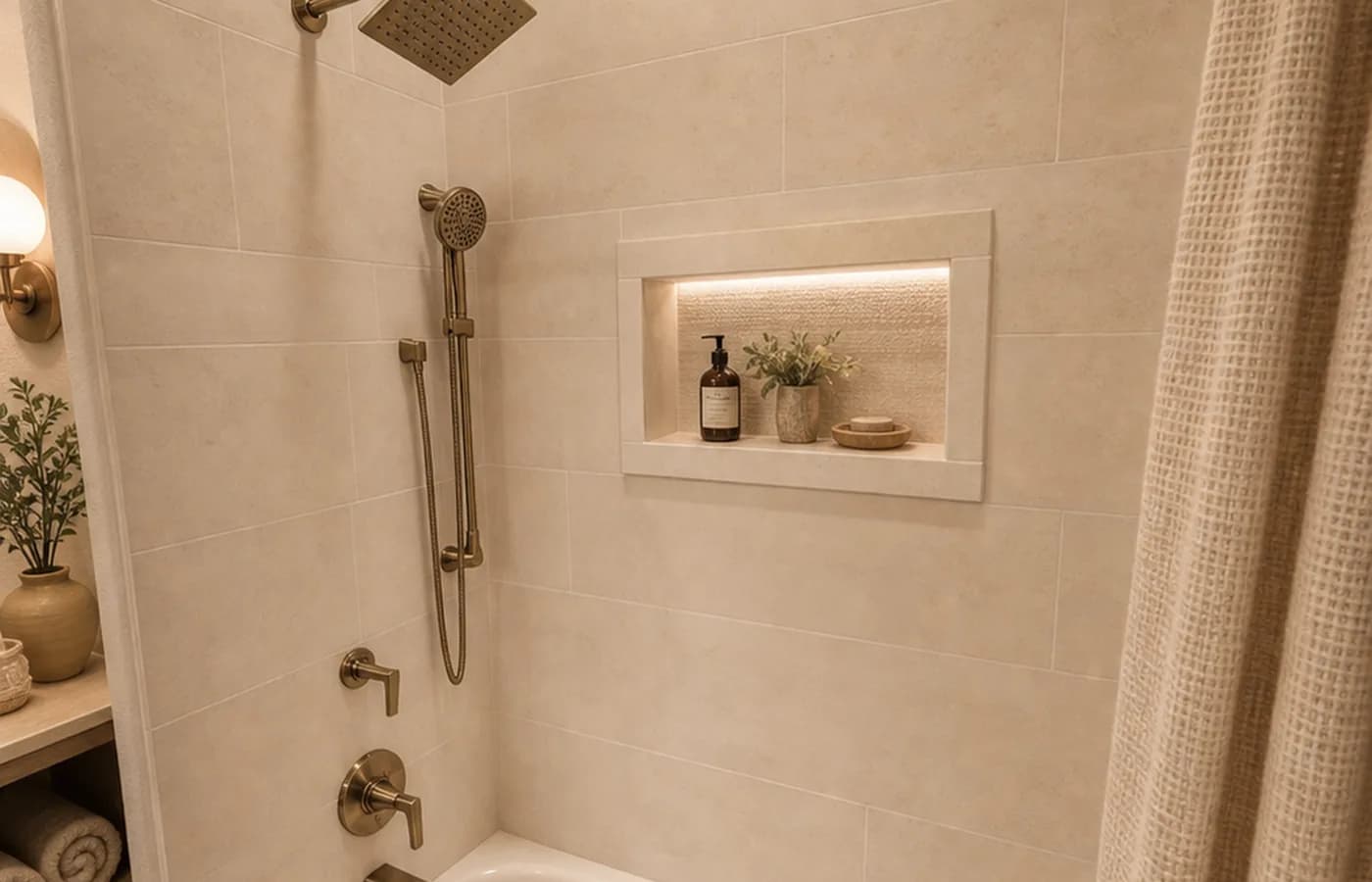
Many strong { type: "bold", text: "shower tile ideas for small bathroom" } schemes run the same field tile across adjacent walls, or carry a quieter tone from dry wall into the wet zone. Continuous planes reduce the sense of a cramped glass box. Contrast works better as a controlled niche, bench or floor change than as four competing wall patterns.
| Layout idea | Best when | Main risk |
|---|---|---|
| Large-format matte field | You want fewer grout lines | Awkward cuts at niches |
| Vertical stack | Ceiling feels low | Emphasizes narrow width |
| Horizontal brick | Stall feels tight side-to-side | Busy if grout contrasts hard |
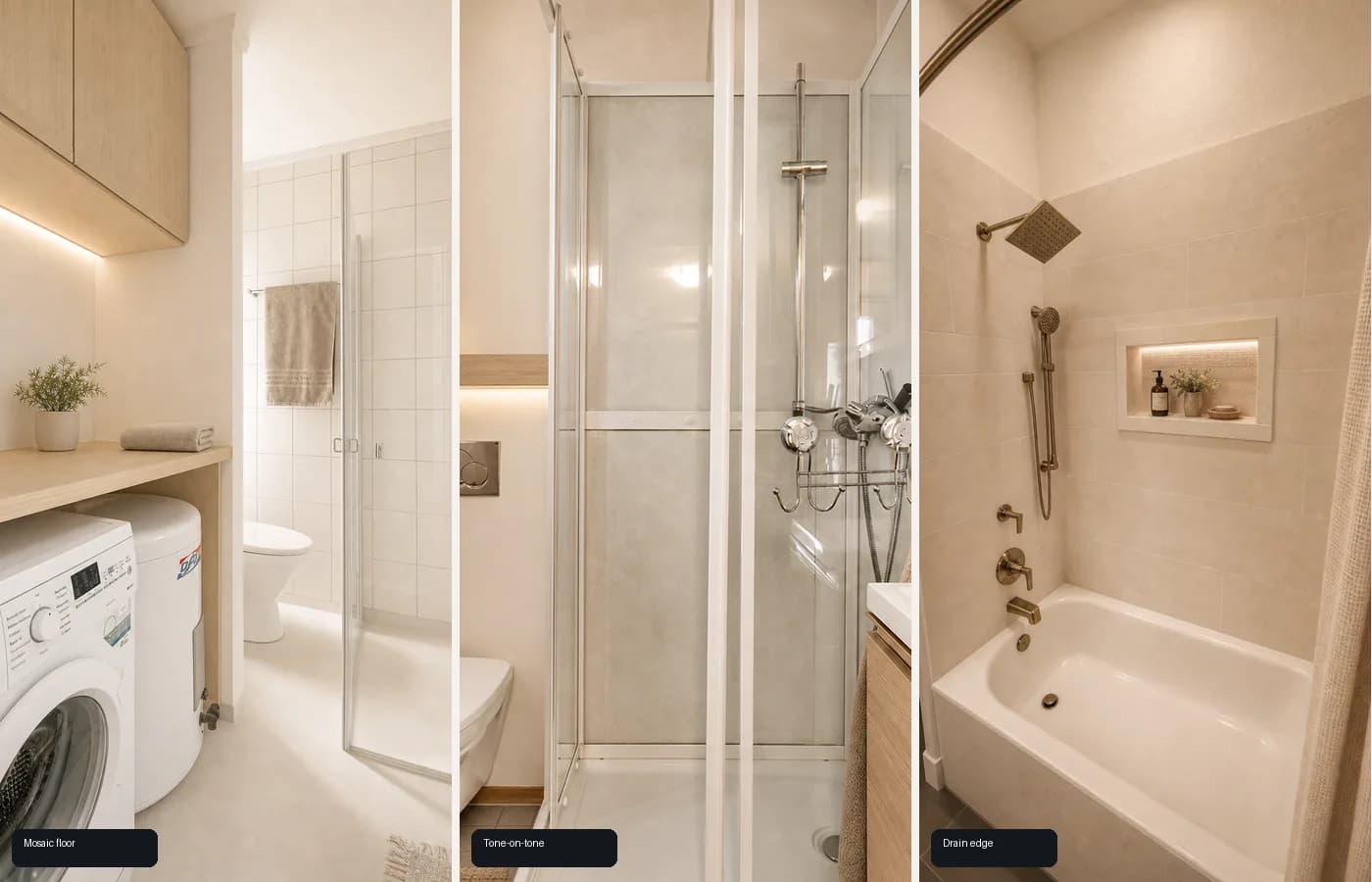
| Calm walls + mosaic floor | Slope and grip matter most | Floor can look unrelated |
| Niche accent only | You want one focal point | Accent tile overpowers |
| Tone-on-tone full height | Room needs quiet continuity | Can feel flat without texture |
| Half-height durable band | Walls take knocks | Horizontal break lowers eye line |
| Stone-look slabs | You want spa calm | Joint and lippage honesty |
| Micro-pattern floor only | Walls stay simple | Cleaning small joints |
| Plaster-look porcelain | Soft modern palette | Needs careful external corners |
| Single accent wall at head | Shower has a clear end wall | Wrong wall makes room narrower |
| Pale field + darker drain edge | You need visual control of water path | Contrast must stay intentional |
Compare twelve layouts that actually fit
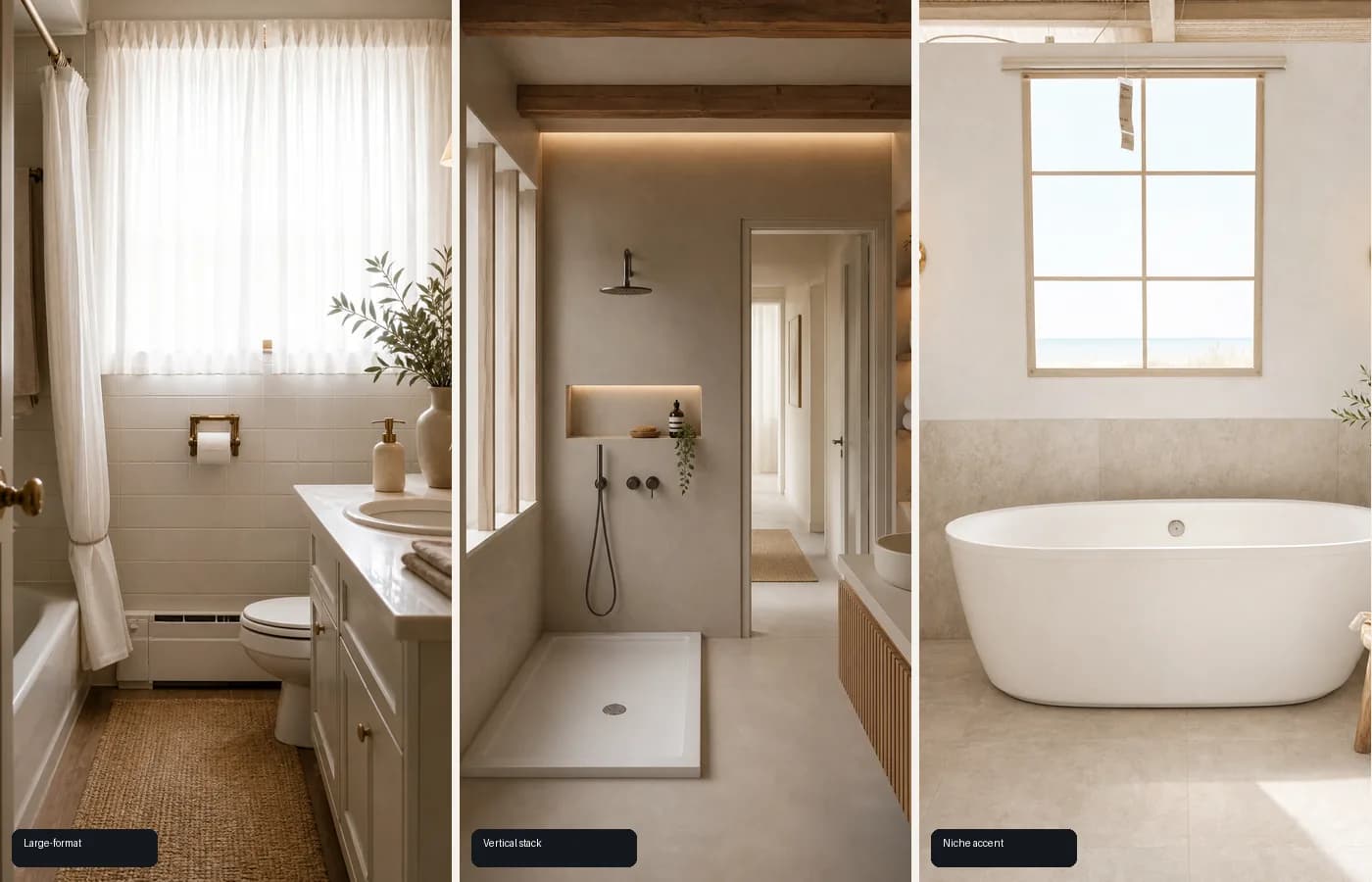
Test these directions against one photo: 1) large-format matte field on all wet walls, 2) vertical stack to lift a low ceiling, 3) soft horizontal brick for width, 4) quiet floor mosaic with calm walls, 5) niche-only accent strip, 6) floor-to-ceiling one color with tone-on-tone grout, 7) half-height durable wainscot look in tile, 8) bookmatched stone-look slabs if joints can stay honest, 9) micro-pattern floor only, 10) warm plaster-look porcelain, 11) soft green or sand accent behind the rain head only, 12) continuous pale tile with a darker curb or linear drain edge. Keep glass, valve height and the doorway visible while you judge.
Protect slope, grip and cleaning
A beautiful wall cannot compensate for a floor that ponds water or a glossy surface that shows every drop. For { type: "bold", text: "small bathroom tile ideas" } inside the shower, confirm slip resistance, cleanable grout color, reachable niches and whether dark polished tiles will fight your lighting. AI can preview the look; it cannot set the fall to the drain.
- Photograph the shower and full bathroom in even light with the glass open if possible.
- Note niche, valve, curb or linear drain, ceiling height and cleaning tolerance.
- Compare three tile stories only: continuous calm, vertical stretch and one controlled accent.
- Wet real samples, confirm slip and trims, then order after waterproofing details are clear.
Upload your bathroom photo and compare a direction.
Coordinate glass, metal and light
Clear glass continues the tile story; fluted or tinted glass softens views but can darken a tiny stall. Match metal finishes to valve, rail and hooks so the shower does not collect three competing colors. Place task light so face and shower entry are readable without blasting glare across glossy tiles.
Sample in the real wet zone before ordering
Order small boards, wet them, and view them at the time of day you shower. Compare two finalists in the same photo with DreamyRoom if you want a whole-room read, then verify quantities, trims, waterproofing layers and installer tolerances. The winning layout is the one that still looks calm after soap, steam and weekly cleaning.
Frequently asked questions
What tile size is best for a small shower?
There is no single best size. Large-format walls can reduce visual noise, while smaller floor tiles can help with slope. Judge cuts, grip and cleaning for your exact stall.
Should shower floor and wall tile match?
They can share a family of color without being identical. Many compact showers use calmer walls and a more practical floor texture.
Do dark tiles make a small shower smaller?
Dark glossy tiles can absorb light and show spots. Matte medium or light tones often keep a tight stall more readable, especially without a window.
How many accent tiles should I use?
One controlled accent—usually a niche, floor or single end wall—is enough in most small showers.
Can AI pick the final tile for me?
AI can compare layout directions in your photo, but finish choice still needs real samples, lighting checks and installer input.
What matters more than pattern?
Waterproofing, slope to drain, slip resistance, reachable storage and a glass choice that preserves light usually matter more than the trend pattern.
Strong small bathroom shower tile ideas begin with geometry and maintenance, not a single hero SKU. Keep the stall honest in a photo, test a short list of layouts, and only then commit to the tile that still works when the glass steams up. Review a related bathroom guide. See what the photo workflow preserves.