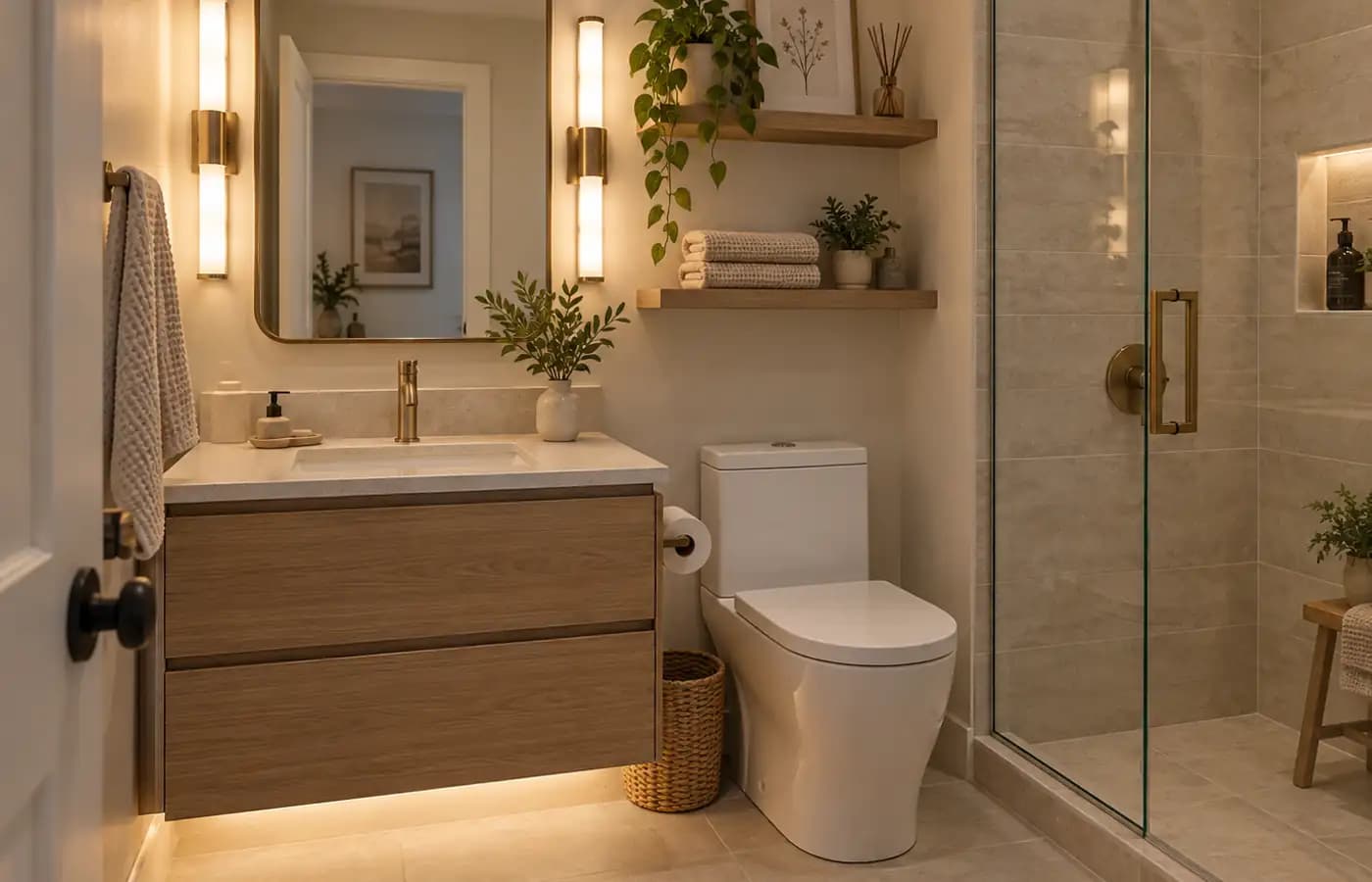
Useful bathroom lighting ideas begin with the task, not the fixture. You need enough light to find a contact lens, shave, clean the room and move safely through a wet space. A single bright ceiling fitting can still leave the face in shadow and make a small bathroom feel harsher than it is.
Start by defining the three light layers, then place each one by activity, compare fixture choices and test the result in a real photo. The goal is a room that works clearly at 7 a.m. and still feels calm at night. Start with the AI room workflow.
Start with three light layers
Ambient light lets you enter and move around the room. Task light supports the mirror, shaving, makeup and cleaning. Accent or night light adds a low, gentle layer when you do not want full brightness. The layers can come from different fixtures or one dimmable system, but each should have a clear job.
Put task light at the mirror
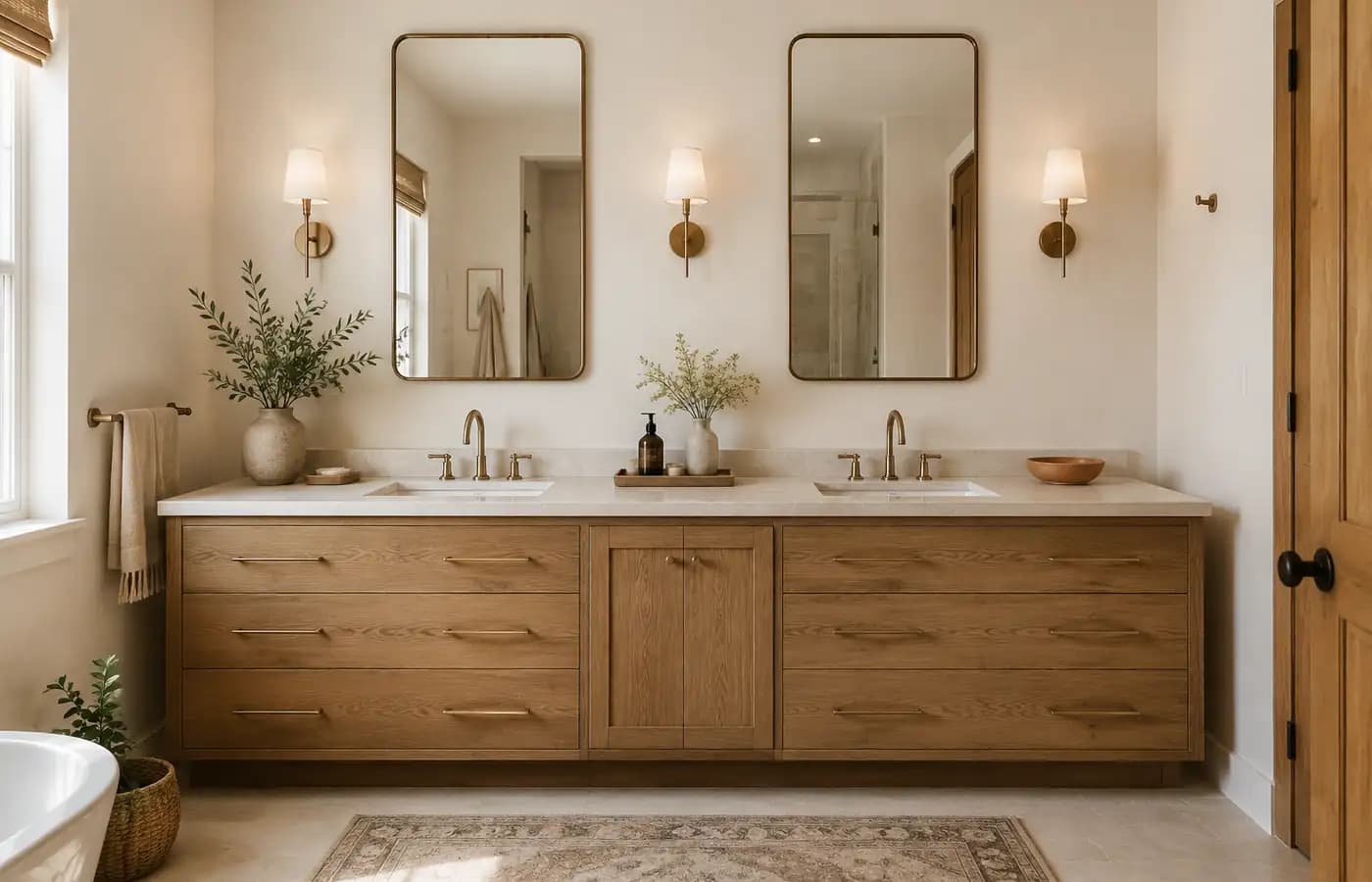
The mirror is where many bathroom lighting plans fail. Bathroom lighting ideas over mirror surfaces should avoid a ceiling fitting behind your head, which can cast a shadow across the face. A single light above the mirror can also make eye sockets look dark. Two vertical fittings at face level or an evenly lit mirror usually create a more useful spread. Keep the fitting, mirror and vanity aligned in the same real wall photo.
| Layer | Main job | Typical location | Check first |
|---|---|---|---|
| Ambient | Move and clean safely | Ceiling or wall wash | Glare and coverage |
| Task | Mirror and grooming | Both sides or mirror | Face shadows |
| Accent | Comfort and depth | Under vanity or niche | Dimming |
| Night | Low-light movement | Low wall or toe-kick | Eye comfort |
Choose a ceiling layer carefully
Bathroom ceiling lighting ideas should reveal the room without becoming the only source. Recessed spots work best when they are placed for the room's paths rather than directly over the person at the mirror. A flush fitting can suit a low ceiling; a small pendant can add character where the height and safety requirements allow it. Keep glare off glossy tile and the mirror surface.
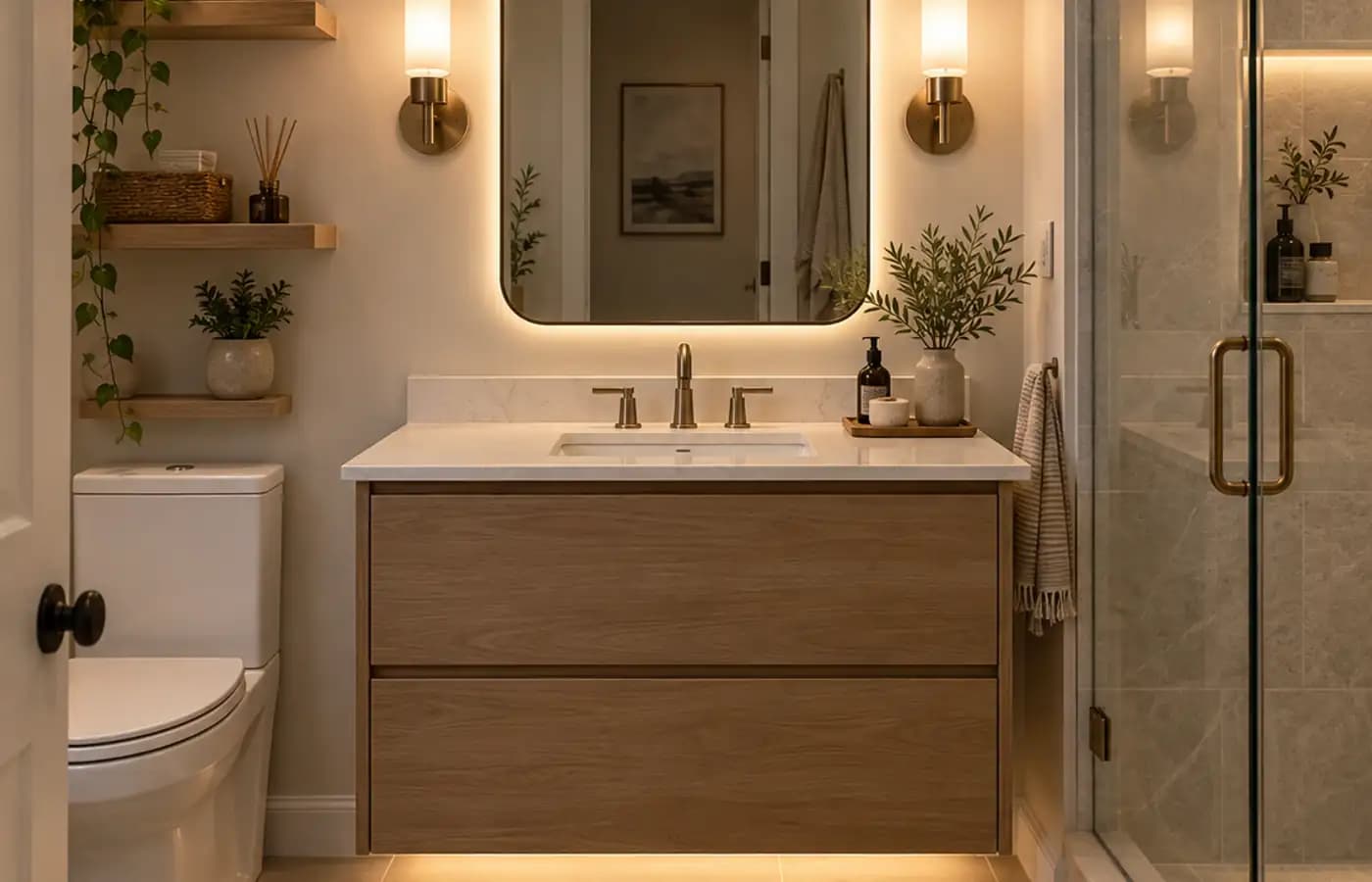
Make small rooms feel softer
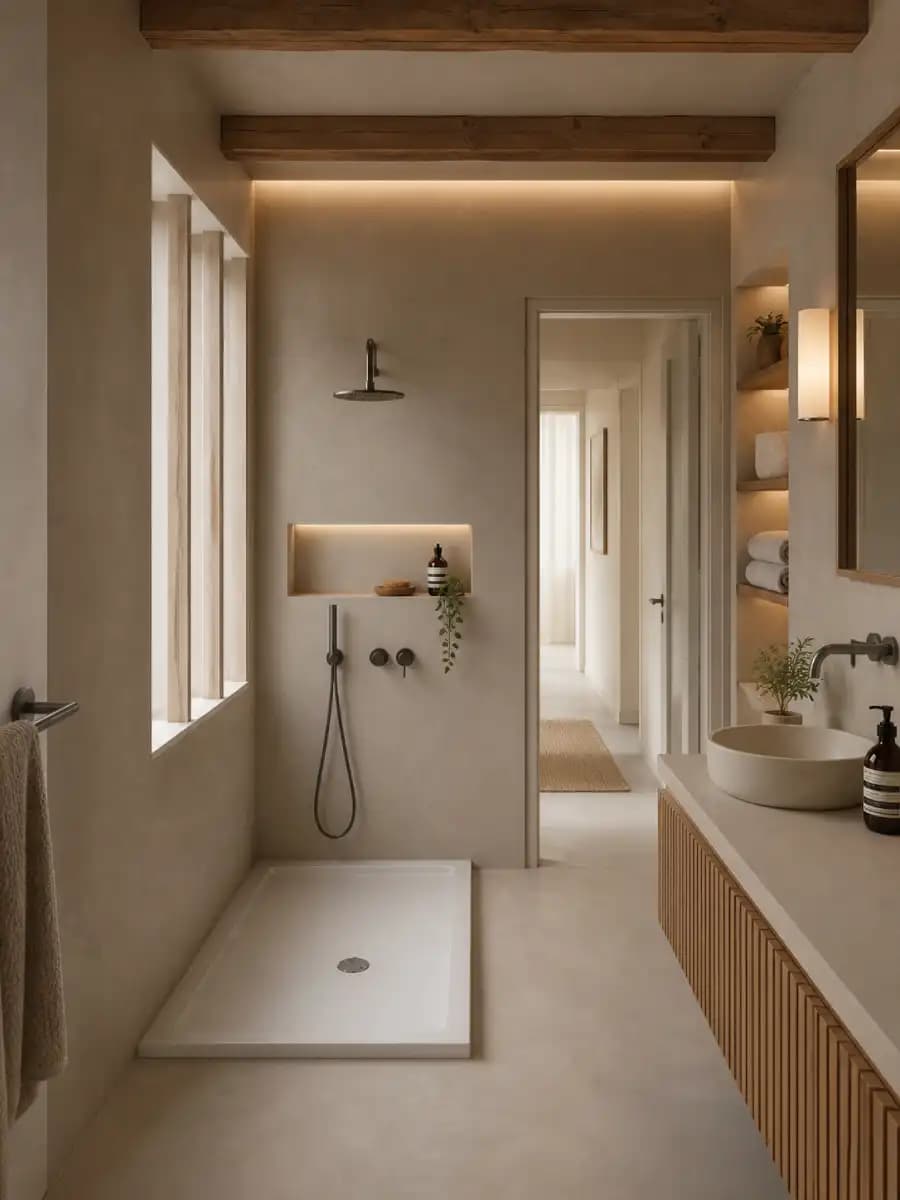
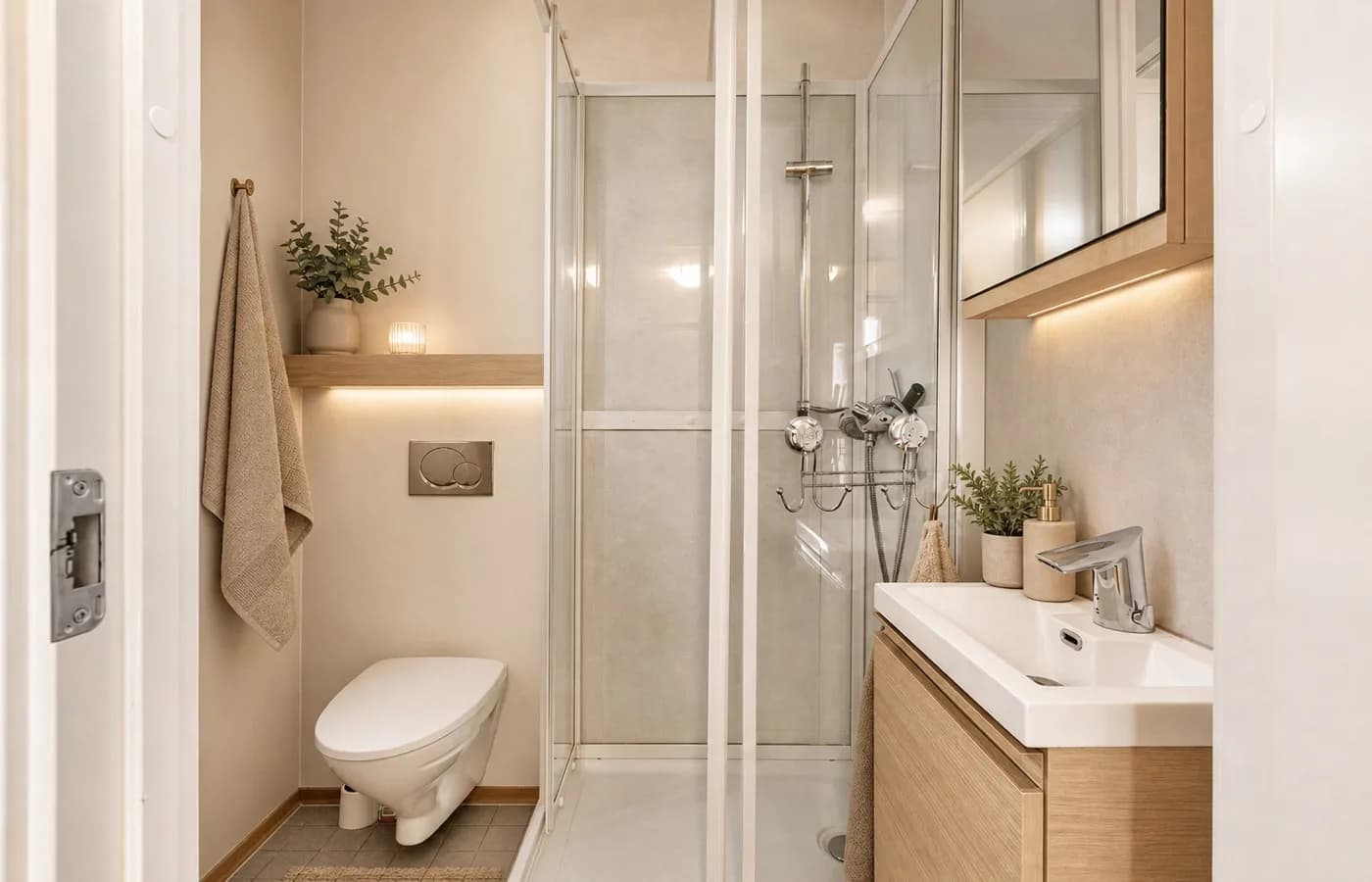
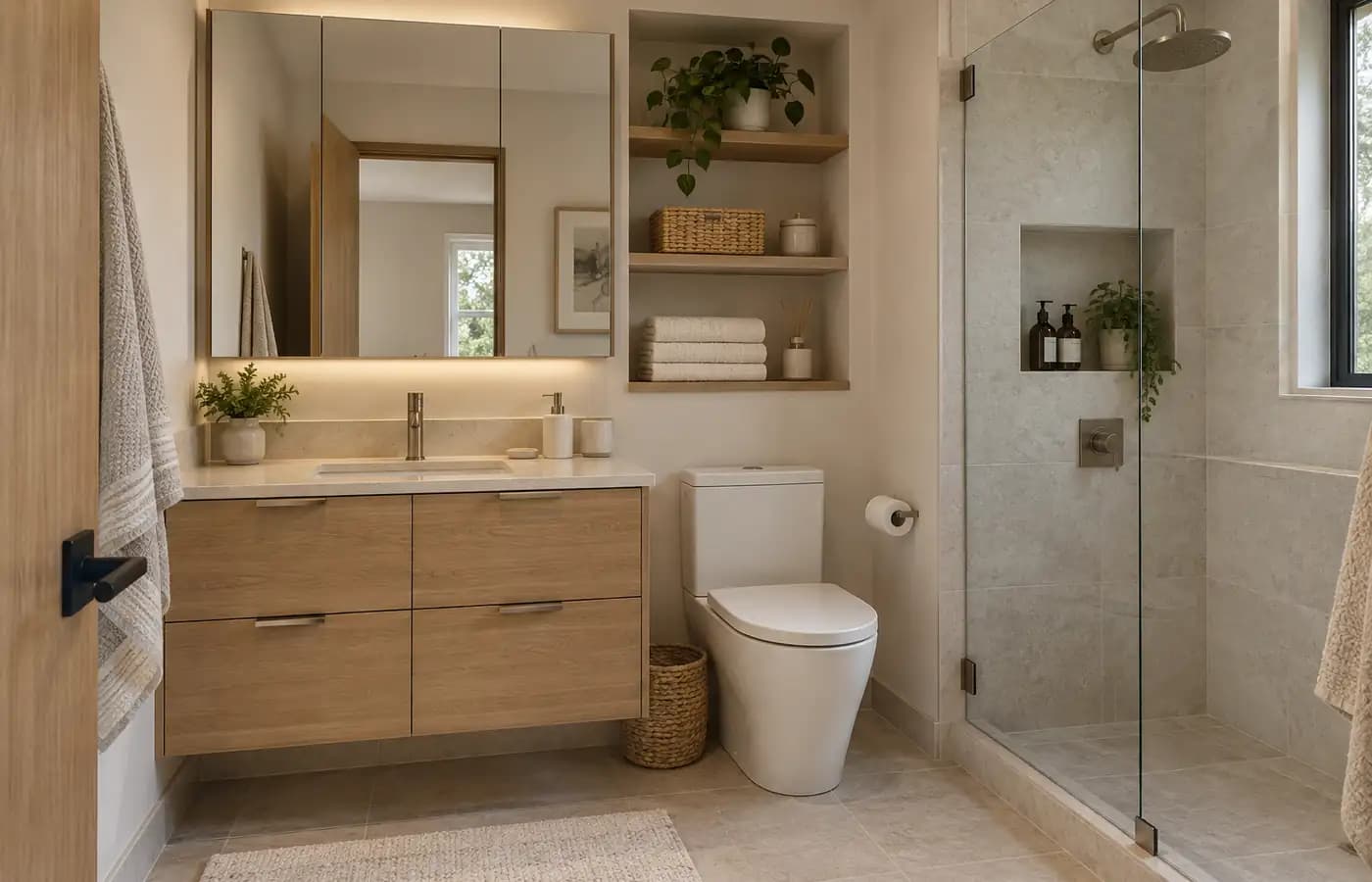
Small bathroom lighting ideas work when light reaches more than one plane. Bounce a gentle layer onto a wall, under a floating vanity or behind a mirror. Pale surfaces can reflect light, but too many glossy finishes create glare. A dimmer and a warmer night setting often make the room easier to use in the early morning.
- Photograph the bathroom at the time you use it most.
- Mark mirror tasks, shower path, door, window and reflective surfaces.
- Test one ceiling-led plan and one layered plan without changing the room.
- Compare shadows, glare, safety, controls and the number of fixtures.
Upload your room photo and compare a direction.
Treat wet zones as a safety decision
Bathroom lighting is not only decorative. Fixture placement, protection ratings, wiring and local wet-zone rules need a qualified electrician. Keep the visual plan honest: an AI image can suggest a sconce or ceiling light, but it cannot confirm whether the product and location are permitted for your room.
Test the plan in a real photo
Create one bright practical option and one softer layered option from the same room. Compare face shadows, mirror glare, shower visibility, towel access and the path to the door. Save the version that solves the most tasks with the fewest fixtures, then verify the final products and wiring on site.
Frequently asked questions
What is the best lighting for a bathroom mirror?
Even light at both sides of the face or an evenly illuminated mirror usually works better than one strong ceiling light behind the user. The final fixture must suit the bathroom location.
How many layers does a bathroom need?
Most rooms benefit from ambient and task layers. A low accent or night layer is optional but useful when the bathroom is used early or late.
Are warm or cool bulbs better?
Choose a color temperature that suits the room and the tasks, then keep sources consistent. A dimmable, comfortable setting is often more useful than chasing a single number.
Can I use a pendant in a bathroom?
Possibly, but ceiling height, fixture rating, placement and local wet-zone rules matter. Ask a qualified electrician before selecting or installing one.
Why does my bathroom mirror show shadows?
The light is often behind the user, too far above the mirror or too concentrated at one point. Side or evenly distributed face light usually improves the result.
Can AI choose the final bathroom lights?
AI can compare fixture positions and visual mood from a photo. It cannot verify electrical safety, product ratings, wiring or local code.
Plan bathroom light by what your eyes and hands need to do. Start at the mirror, add enough ambient coverage for movement, then use a lower layer for comfort. Test the same room in two directions before ordering fixtures. Review a related room guide. See what the photo workflow preserves.