A place to read and write does not have to take up a whole room. The harder questions are practical: once your computer and books are on the desk, is there still room to write? Does the chair hit the bed or a cabinet when you move back? Do your eyes and shoulders feel comfortable after an evening at the desk?
Those questions are a useful starting point for small home office design. Using a photograph of a wood-toned study, this guide looks at desk layout, bookshelves, daylight, and storage. The photograph helps illustrate how the furniture works together; it does not provide a basis for estimating the room's floor area or custom furniture dimensions.
1. Decide what you will use the space for each day
Occasional reading, full days of remote work, and a child's homework each call for a different work surface. Reading and handwriting need room to spread out books. Computer work needs space for a monitor, keyboard, and your forearms. If two people will use the room at once, consider lighting, power outlets, and how each person will move around. Make the most frequent activity work well before adding space for tea, displays, or occasional guests.
Lay out the things you intend to keep: your computer, frequently used books, file boxes, and printer. Work out what needs to stay within reach and what can go elsewhere. In a small study, a rarely used printer left on the desk can get in the way more than having one fewer cabinet.
Then measure the walls, windowsill, outlets, door swing, and existing furniture. For a bedroom office, include access beside the bed, the space needed to open the wardrobe, and your route to bed. An empty wall's length tells only part of the story. The room needs to work with someone sitting in the chair and the drawers pulled open.
2. Check chair clearance before choosing a wall or window position
A straight desk against a wall usually takes up less space and makes cables easier to manage. It is a useful way to keep work along one side of the room. Leave the wall above it clear or add a few shallow shelves; a matching furniture set does not need to surround your head and legs with cabinets. A corner desk may offer more surface area, but whether you can reach the corner and turn your chair matters more than the total length of the desktop.
A window brings natural light, but it can also cause glare. For computer work, try sitting with the window to one side, then check the screen at the times you normally use it. Facing a window is not always comfortable, while sitting with your back to it can leave a bright window reflected across the screen. Keep enough room to open the window, draw the curtains, and clean around them.
For an adult's single-person desk, a depth of around 60–70 cm can be a starting point when testing a layout. Treat that as a shopping reference, though: a large monitor, a monitor arm, or drawing materials may need a deeper surface. Choose the width around the things you actually use. Mark the desk legs on the floor with masking tape, bring over a chair, and try sitting, rolling back, standing up, and opening nearby cabinets. This often reveals problems that a furniture specification sheet will not.
| Arrangement | When it may work | What to check once it is in place |
|---|---|---|
| Straight desk against a wall | A long, narrow room or a space where the center needs to stay clear | Chair clearance, outlet positions, and whether overhead shelves could catch your head |
| Desk with a window to one side | You want natural light and have an uninterrupted wall beside the window | Screen reflections, the window's opening range, and room to draw the curtains |
| Corner desk | Two usable walls and several devices or hands-on tasks | Reach into the corner, legroom below, and cable routes |
| Freestanding desk | You need access from two sides and the room has enough clear space | Circulation around the desk, cabinet doors, and the chair's range of movement |
| Small desk in a bedroom | There is no separate study and one person mainly uses the desk for short sessions | Access beside the bed, wardrobe doors, and whether evening light disturbs sleep |
3. A closer look at the photograph: books to the side, a desk beside the light
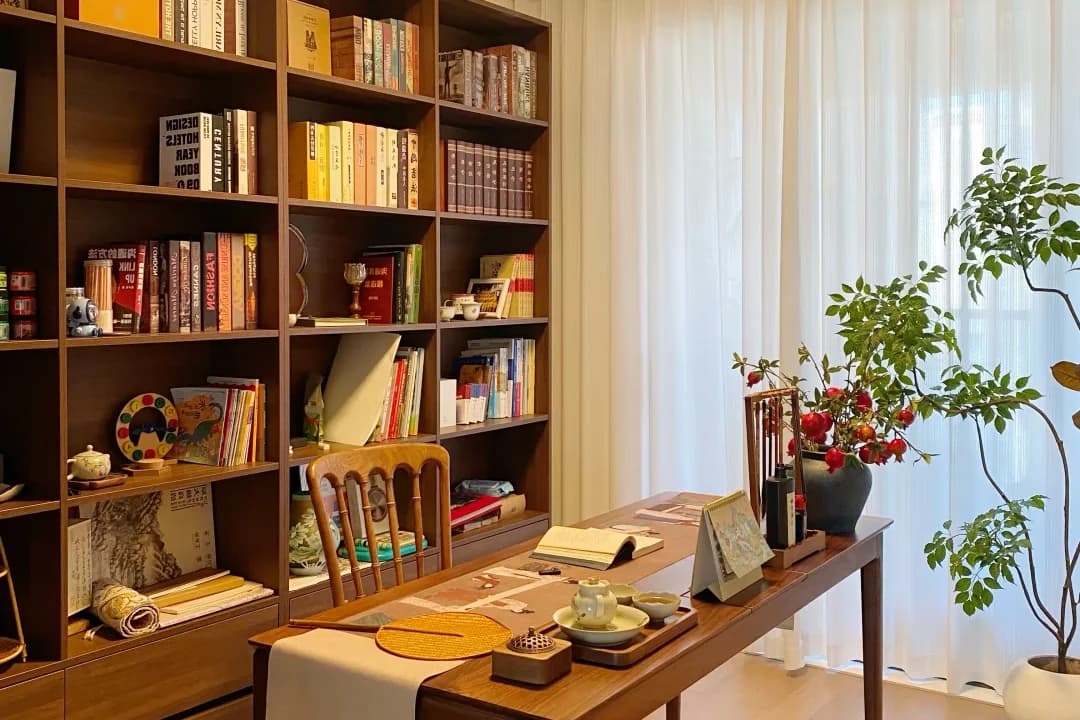
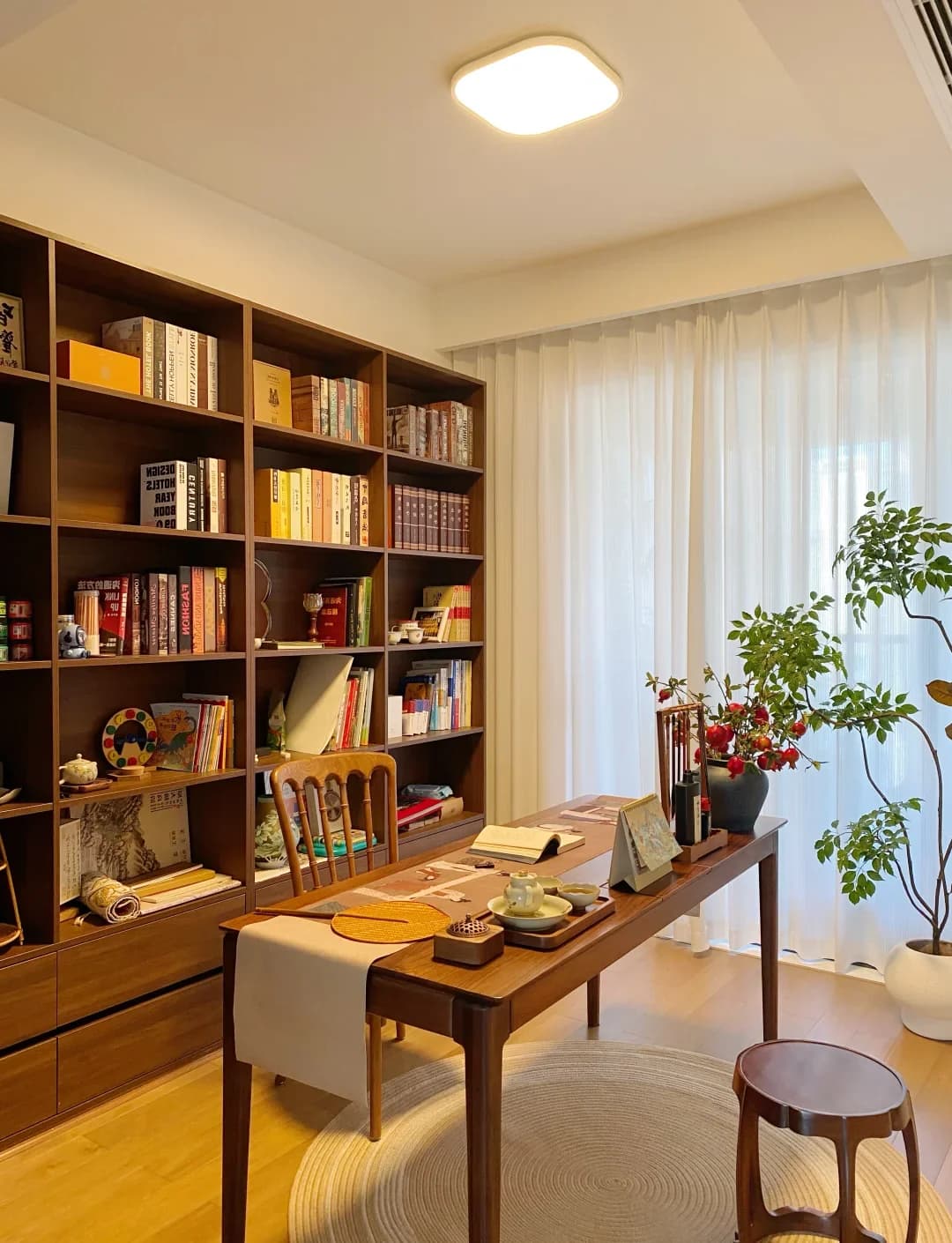
The photograph shows a full wall of open bookshelves on the left, with drawers below. A freestanding desk sits beside a window covered by sheer curtains. There are plenty of books, decorative objects, and pieces of tea ware, but the main furniture follows clear boundaries, and tall cabinets do not block the window. Wood tones carry through the desk, shelves, and floor, while the lighter walls and curtains give the eye a place to rest.
The useful lesson is how each area has a role: most books are stored against the wall, the desktop serves reading and writing, and the window area lets in light. Whether a freestanding desk and a full wall of shelves will work at home depends on your available clearance. The photograph does not establish how wide the passage behind the desk is. In a narrower room, moving the desk against a wall and removing a column of shelving may be more practical.
The plant, tea setup, and small stool make the room feel lived in, but they all take up space. If you work at the desk for long stretches, start by reducing the objects on it to make room for your keyboard and arms. Choose the chair you use every day around your own sitting position, rather than deciding solely on how it looks beside a wood desk.
4. Plan home office storage around what you need within reach
Bigger bookshelves are not always better. Keep everyday reference books, your current reading, and frequently used stationery where you can reach them comfortably while seated or after standing up. Records you need to keep but rarely consult can go higher up. Place heavy, oversized books low down, secure shelving as the installation instructions require, and avoid loading shelves above your head with heavy objects.
Open shelves make books easy to find, but they also put every loose item on display. Leave frequently read books on open shelves and put cables, receipts, and spare stationery in drawers or cupboards. Shelves do not have to be filled from end to end. Leave some room for new books and papers you need to put down temporarily; keeping things in order will be easier afterward.
Base shelf depth on the books and file boxes you already own. Standard books, art books, and office files come in different sizes. Making every shelf deep just to give the unit a uniform appearance can leave a hidden row behind the first one. Before ordering custom shelving, measure your largest books and ask about shelf spans and load limits.
- Keep only what you are using on the desk, and give a closed laptop or an open notebook a regular place.
- Organize chargers and power strips near an outlet so cables do not cross the space around your chair and feet.
- Try organizing your things in an existing drawer or a file box before deciding to add more cabinets.
5. Plan home office lighting for daytime glare and evening reading
The sheer curtains in the photograph can soften daylight, but a photograph alone cannot tell you how much light reaches the desktop. There is no separate reading lamp visible either. If you like the warm atmosphere, keep the overall palette and add light to suit reading or work. The number of light fittings visible in the image is not a lighting plan.
An overhead light provides general room illumination, while a desk lamp lights your book and the task in front of you. If you write with your right hand, try placing the lamp to the front left; reverse that for left-handed writing. Then adjust it around the shadows you actually see. Test the shade and lamp head from your seated position so the light does not shine into your eyes.
When using a computer, pay attention to the brightness difference between the screen, desktop, and surrounding walls. Avoid making the screen the room's only bright area. When choosing a lamp, first consider how well you can adjust its position and brightness and shield its light, then compare color temperatures. Reading a page and looking at a screen at your desk in the evening tells you more than relying on broad claims that warm light feels better or white light is clearer.
6. Try the space before deciding where to spend
If your budget is limited, start with the desk, chair, and lighting you use every day. Adjust the desk and chair together so your shoulders can relax, your forearms have support, and your feet rest firmly on the floor. If you spend long periods looking at a screen, check its height and distance too. A wood chair that looks appealing and works for occasional reading may not suit a full working day.
In a bedroom office, be especially selective about the amount of furniture. Keep the desk clear of wardrobe doors and access beside the bed, and put work materials back in a drawer at the end of the day. If you take video calls, turn on the camera and check the background. You can spot a bed in view or a window behind you causing backlighting before buying furniture.
Make a temporary setup with furniture you already have and use it for a few days. Note where you keep taking an extra step and where things tend to pile up. Once those problems are clear, plan built-in cabinets and fixed electrical points. Artwork, rugs, and decorative objects can come later. Filling every corner at the start makes the room harder to adjust.
- Try reading and typing in daylight and again in the evening, checking for noticeable glare or shadows from your hands.
- Pull the chair back and open the drawers while seated, then have someone walk behind you to check for conflicts.
- Put your books and everyday items back in place and check whether clearing the desk at the end of a session feels easy.
Frequently asked questions
Can a 4–6-square-meter room work as a separate study?
It may, but floor area is only one factor. The room's shape, doors, windows, and furniture depth all affect what fits. First try a desk that meets your main need, a chair that can pull back properly, and the shelving you need. If those basic movements are restricted, reduce the cabinetry or consider an open reading nook instead.
Does a desk in a small study have to go by the window?
No. Daylight is useful, but you also need to consider reflections, direct sun, window access, and outlets. Try a position with the window to one side. If the screen still reflects too much light when you sit down, placing the desk against a wall and adding task lighting is another option.
Can dark wood work in a small home office?
Yes. In this photograph, the dark wood desk and bookshelves sit against lighter walls and curtains, with natural light from the window. If your room receives less daylight, try reducing the wall area covered by tall cabinets, keeping a light background, and testing the effect with a few wood pieces first.
Should I choose open bookshelves or cabinets with doors?
Open shelves keep frequently read books easy to reach. Closed storage works well for loose items, cables, and papers you seldom need. You can combine the two. Before deciding how much should be open or closed, take stock of your books and belongings, then work out what you want to display and what needs protection from dust.
How can a bedroom and workspace share a room comfortably?
First keep access beside the bed and the wardrobe doors clear. Group work materials in one place and choose a desk lamp that does not shine directly onto the bed. Put away papers and your computer before sleep. If you regularly take video calls or work late, consider the schedule of anyone sharing the room; another room may be a better place to work.
Should a wall of built-in bookshelves come first on a limited budget?
It can usually wait. Start with a desk and chair you can use comfortably and adequate lighting, then use existing furniture to test your storage needs. Fixed wall-to-wall shelving is more costly to change. Waiting until you understand your book collection, the places you use most, and the room's circulation makes it easier to spend where it will help.
A small study needs to accommodate everyday movements first: opening a book, pulling back a chair, and reaching for what you use most. Borrow some wood tones and daylight ideas from the photograph, then check the desk, storage, and lighting against your own room. Leaving out a piece of furniture you do not yet need can make a little more room for quiet reading.