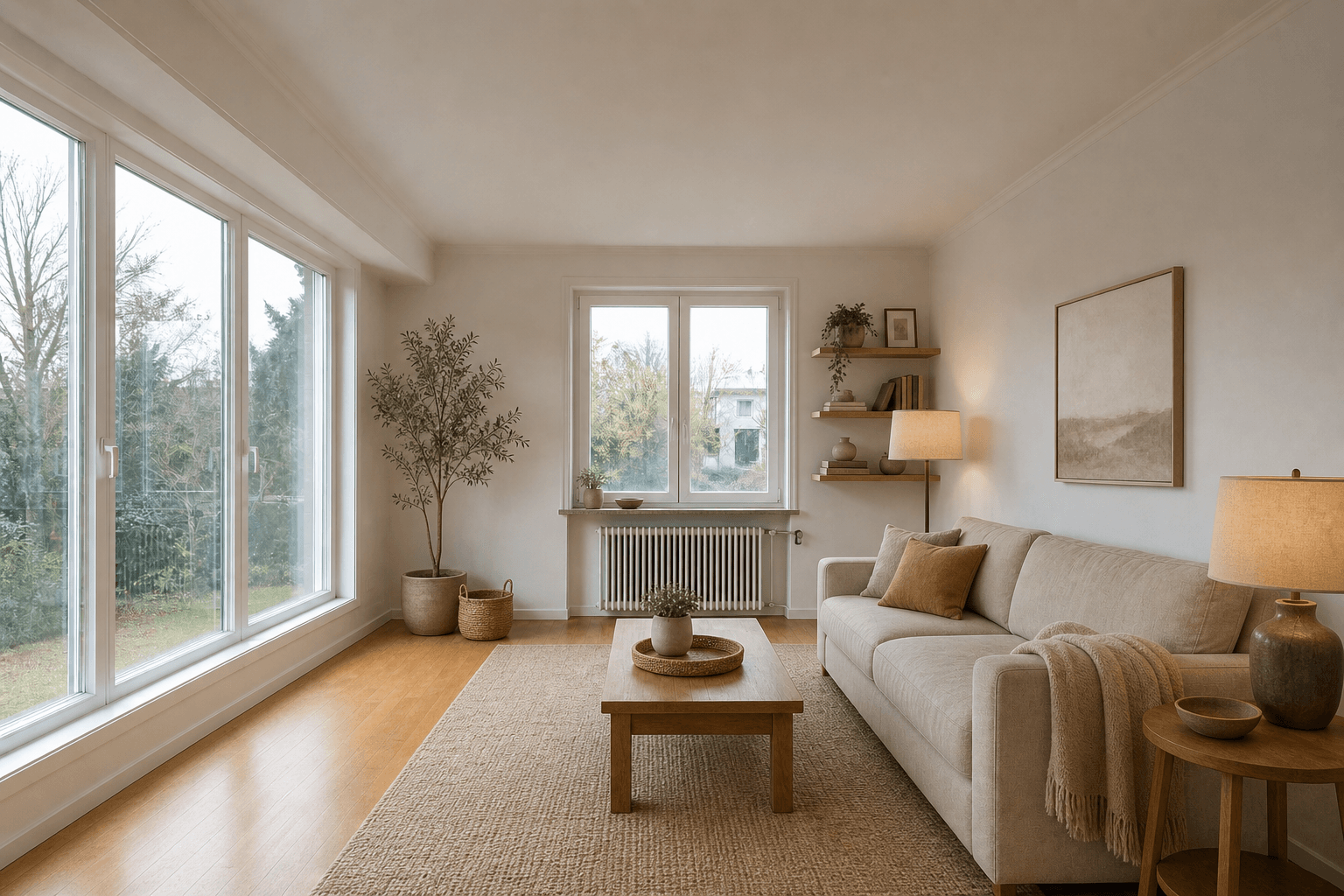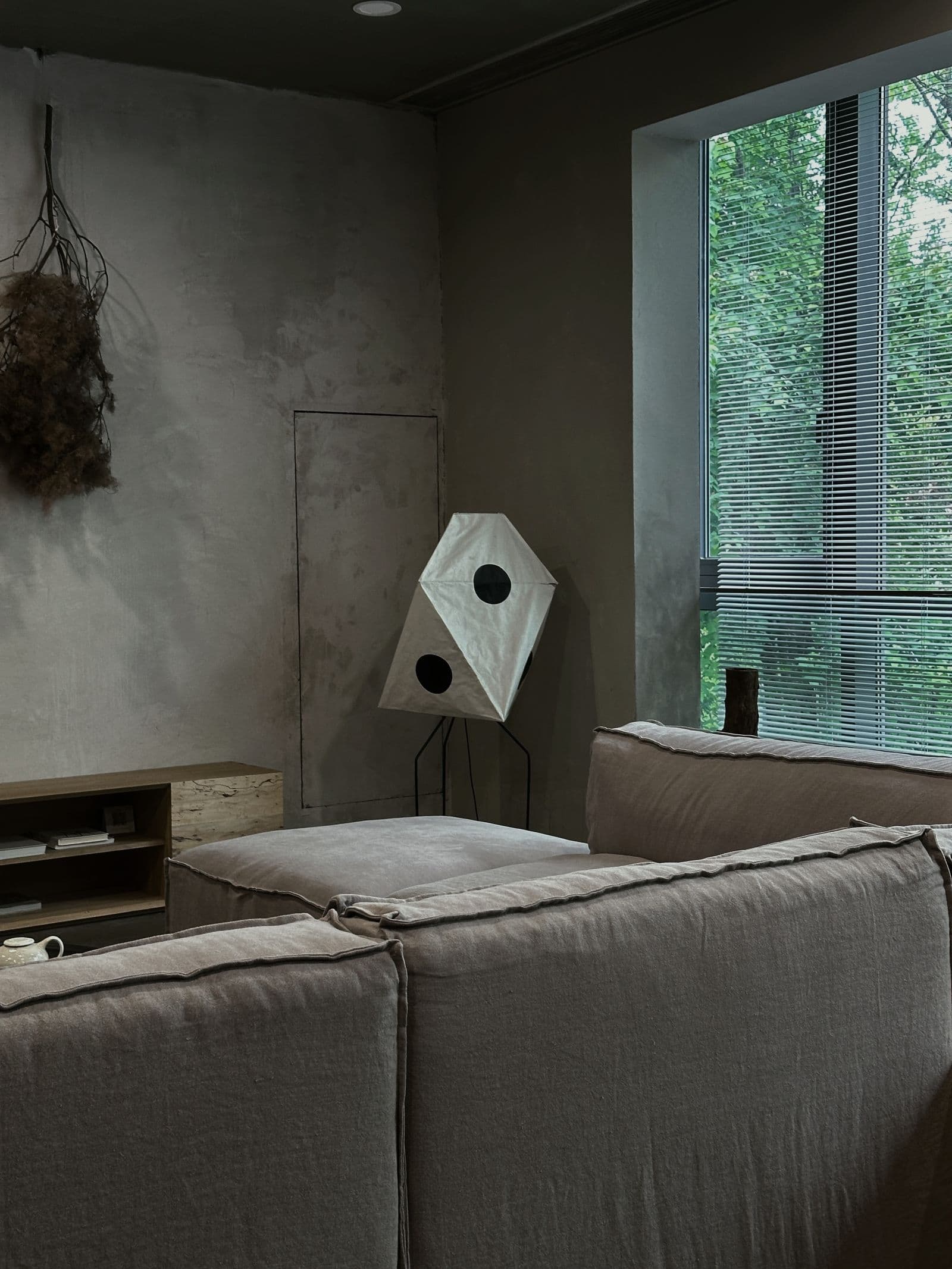
A Japandi bedroom feels calm because it edits the room carefully. Natural textures, low furniture and a quiet palette leave enough breathing room for the eye—and for the end of the day.
You can test the feeling from a single room photo before you repaint or replace anything. Focus on the visual relationships first, then make the practical changes that support them.
Keep the palette quiet, not flat
Start with two or three close neutrals: warm white, oat, clay or muted charcoal. Add contrast through texture—linen, oak, paper, wool—rather than many accent colors. A single darker element, such as a timber headboard, gives the room enough structure.
Choose furniture with visual breathing room
- Use a low bed or a simple frame that leaves some floor visible.
- Choose bedside tables with one clear surface and closed storage below.
- Leave a small margin between large pieces and the wall when circulation allows.
- Keep textiles tactile but limited to a few repeating tones.
Use lighting to create a landing zone
A bedroom needs more than one bright overhead light. Add a warm bedside source for reading, a dimmable ambient source and a soft glow near the wardrobe or curtain. The goal is a sequence that helps you slow down, not a room that is equally bright everywhere.
Make the reset easy
Calm design lasts when the room is easy to put back. Give laundry, books and charging cables a home. Hide the items that create visual noise and keep the surfaces you touch every day intentionally open.
A calmer bedroom is a collection of small permissions: fewer competing colors, softer light and enough storage to finish the day cleanly. Use a photo to compare the overall direction, then change one high-impact detail at a time.